

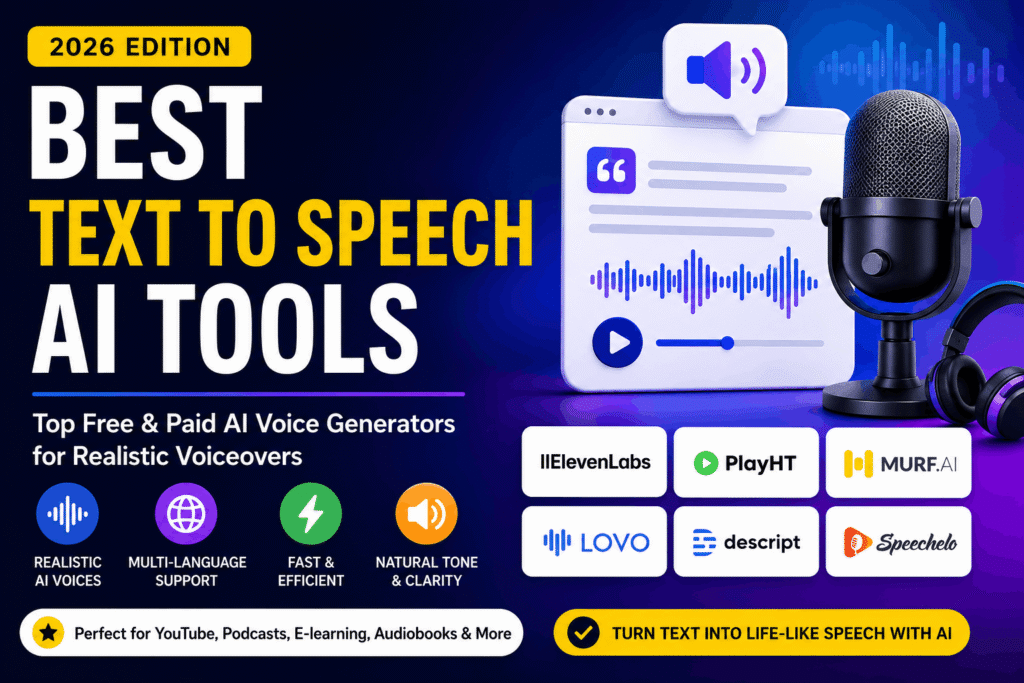
Best Text to Speech AI Tools in 2026 (Top Free & Realistic Voice Generators)
In 2026, content creation is evolving faster than ever—and voice content is leading the way. From YouTube automation channels and podcasts to e-learning platforms and audiobooks, creators and businesses are increasingly relying on AI-generated voices to scale their content efficiently.
This is where the best text to speech AI tools come into play.
Text-to-speech (TTS) AI tools allow you to convert written text into realistic, human-like voiceovers within seconds. You no longer need expensive recording equipment or professional voice actors. Whether you’re a student, marketer, YouTuber, or entrepreneur, these tools can help you create high-quality audio content quickly and affordably.
In this comprehensive guide, we’ll explore the best text to speech AI tools in 2026, including free and paid options, detailed comparisons, use cases, and expert tips to help you choose the right tool.
What is Text to Speech AI?
Text to Speech AI is a technology that converts written text into spoken words using artificial intelligence and deep learning models.
Unlike traditional robotic voices, modern AI voice generators use natural language processing (NLP) and neural networks to create voices that sound incredibly human—complete with tone, emotion, and pacing.
Benefits of Using Text to Speech AI Tools
1. Save Time and Money
No need to record audio manually or hire voice artists.
2. High-Quality Voice Output
Modern tools produce ultra-realistic voices with natural tone and emotion.
3. Multi-Language Support
Create content in multiple languages and reach a global audience.
4. Scalability
Generate hundreds of voiceovers in minutes.
5. Accessibility
Useful for visually impaired users and educational content.
Best Text to Speech AI Tools in 2026
Below are the top tools you should consider.
1. ElevenLabs
Best For: Ultra-realistic voice generation
ElevenLabs is widely considered one of the most advanced AI voice tools available today.
Key Features:
- Hyper-realistic voices
- Voice cloning
- Emotion control
- Multi-language support
Pros:
✔ Extremely natural voice quality
✔ Ideal for storytelling and YouTube
Cons:
✖ Limited free usage
Pricing: Free + Paid plans
2. PlayHT
Best For: Podcast and long-form content
PlayHT offers a large library of voices and excellent audio quality.
Key Features:
- 800+ AI voices
- Multiple languages
- Podcast-ready audio
Pros:
✔ Great for audiobooks
✔ API available
Cons:
✖ Premium pricing
3. Murf AI
Best For: Marketing and business presentations
Murf AI is popular among marketers and professionals.
Key Features:
- Studio-quality voices
- Voice editing tools
- Background music integration
Pros:
✔ Professional-grade output
✔ Easy-to-use interface
Cons:
✖ Limited free plan
4. Lovo AI
Best For: Video creators and ads
Lovo AI provides emotional voiceovers and a wide range of styles.
Key Features:
- Emotional voices
- Voice customization
- Script editor
Pros:
✔ Great for ads and storytelling
✔ Affordable pricing
5. Descript
Best For: Editing + voice generation
Descript combines editing tools with AI voice features.
Key Features:
- Overdub (AI voice cloning)
- Audio/video editing
- Transcription
Pros:
✔ All-in-one tool
✔ Great for creators
6. Speechelo
Best For: Beginners
Speechelo is simple and beginner-friendly.
Key Features:
- One-click voice generation
- Basic voice styles
- Easy interface
Pros:
✔ Easy to use
✔ Budget-friendly
Free vs Paid Text to Speech AI Tools
| Feature | Free Tools | Paid Tools |
|---|---|---|
| Voice Quality | Basic | Ultra realistic |
| Usage Limit | Limited | Unlimited |
| Languages | Few | Many |
| Customization | Low | High |
👉 Tip: Start with free tools, upgrade when needed.
How to Choose the Best Text to Speech AI Tool
✔ For YouTube Automation
Use ElevenLabs or Lovo AI
✔ For Podcasts
Use PlayHT
✔ For Marketing Videos
Use Murf AI
✔ For Beginners
Use Speechelo
Best Use Cases of Text to Speech AI
1. YouTube Automation
Create voiceovers without recording.
2. Podcast Creation
Generate episodes faster.
3. E-Learning
Convert lessons into audio.
4. Audiobooks
Turn written books into audio format.
5. Accessibility
Help visually impaired users.
Tips for Getting the Best AI Voice Output
1. Use Proper Punctuation
Improves voice clarity.
2. Add Pauses
Use commas and periods effectively.
3. Choose the Right Voice
Match tone with content.
4. Edit and Refine
Always review output before publishing.
Common Mistakes to Avoid
- Using robotic default voices
- Not editing the script
- Ignoring pronunciation
- Overusing AI without personalization
FAQs About Text to Speech AI Tools
Q1: What is the most realistic text to speech AI tool?
ElevenLabs is currently one of the most realistic options.
Q2: Are there free text to speech AI tools?
Yes, many tools offer free plans with limited features.
Q3: Can I use AI voices for YouTube monetization?
Yes, but ensure content is original and valuable.
Q4: Which AI tool is best for beginners?
Speechelo is a good starting point.
Final Verdict
The rise of AI voice technology has transformed how we create and consume content. The best text to speech AI tools are no longer just alternatives—they are essential tools for modern creators.
Whether you want to build a YouTube channel, create podcasts, or improve accessibility, these tools can help you achieve your goals faster and more efficiently.
Start experimenting with a few tools from this list and build your own workflow. The future of content creation is voice—and AI is leading the way.
🚀 Explore More AI Tools
Discover more guides and tools on 10hubs and stay ahead in the AI revolution.